
Project by: James Armstrong
The Dune Weaver Pro Mini is a mesmerizing DIY kinetic sand table that creates intricate, ever-changing patterns using electromagnetic control. A steel ball moves beneath the sand surface, guided by strategically positioned magnets controlled through stepper motors. The Mini version utilizes an affordable IKEA Bambú bowl as the sand table surface, making this an accessible project for makers and artists at the makerspace.
Project Overview
This kinetic art installation combines mechanical engineering, 3D printing, electronics, and Arduino programming to create a fully functional sand drawing machine. The project showcases practical applications of stepper motor control, magnetic field principles, and custom mechanical design suitable for makerspace fabrication.
Key Components & Materials
- IKEA Bambú Bowl – The sand table surface (approximately 12 inches diameter)
- Stepper Motors – Control the XY positioning of the magnetic field
- Neodymium Magnets – Guide the steel ball beneath the surface
- Arduino Microcontroller – Orchestrates motor movements and pattern generation
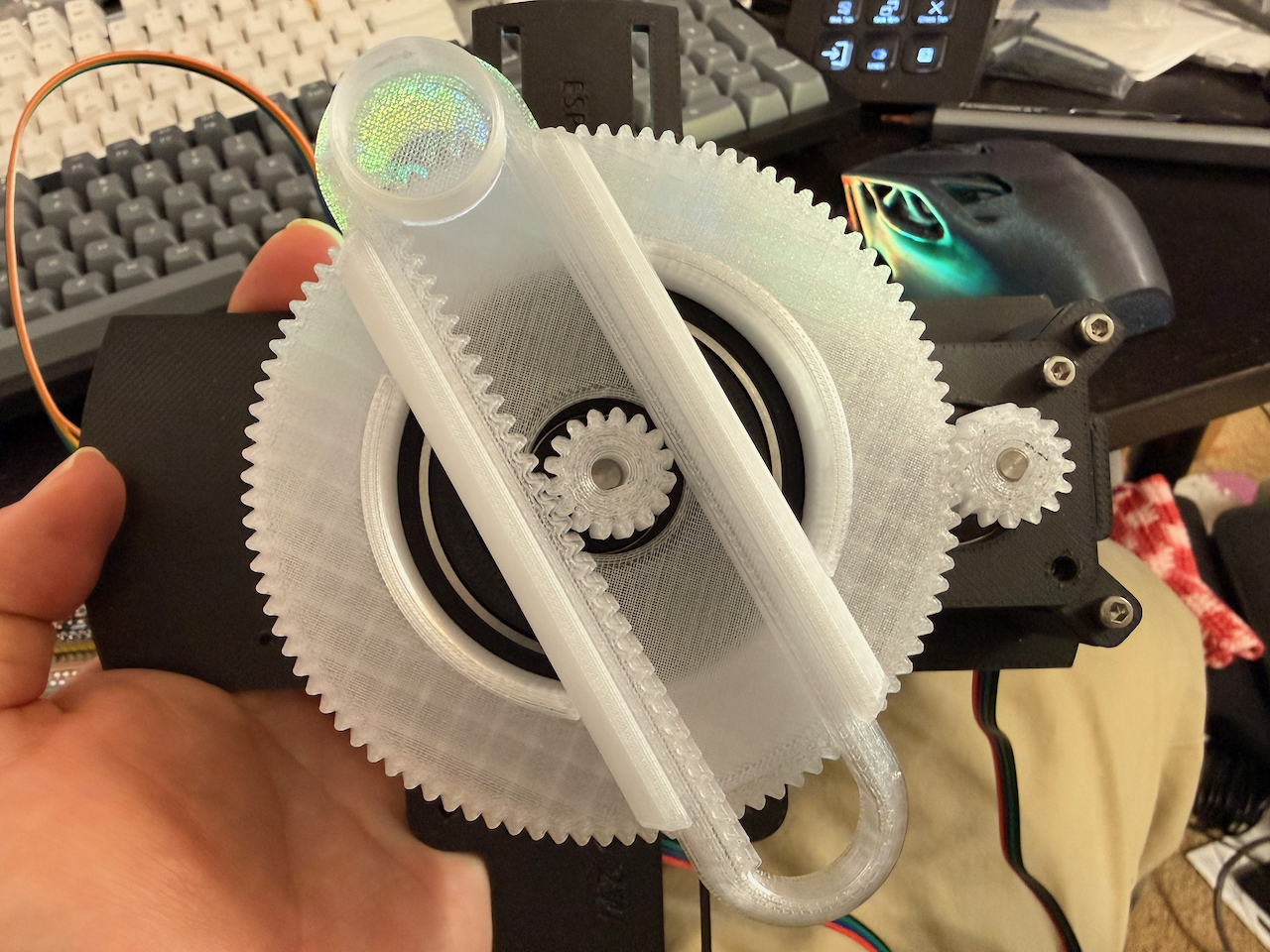
- 3D Printed Components – Custom gears, mechanical linkages, and structural parts
- Fine Sand – Typically kinetic sand or very fine play sand
- Steel Ball Bearing – The element that creates the visible patterns
- Power Supply – Appropriate voltage regulation for motors and electronics
- Mounting Hardware – Brackets and fasteners for assembly
3D Printed Parts
The Dune Weaver Mini uses several custom 3D printed components to create the mechanical transmission system:
- Drive Gears – Custom gearing for smooth ball movement
- Motor Brackets – Secure mounting for stepper motors
- Linkage Arms – Mechanical transmission components
- Magnet Holders – Precise positioning of neodymium magnets
- Bowl Support Structure – Custom frame for the IKEA bowl integration
Assembly & Build Process
The Mini version construction involves:
- 3D Print Preparation – Print all custom parts using a capable FDM printer at the makerspace
- Motor Assembly – Mount stepper motors to the mechanical frame
- Gear Train Setup – Assemble printed gears for XY axis control
- Magnet Installation – Position magnets precisely beneath the bowl
- Bowl Integration – Secure the IKEA Bambú bowl to the frame
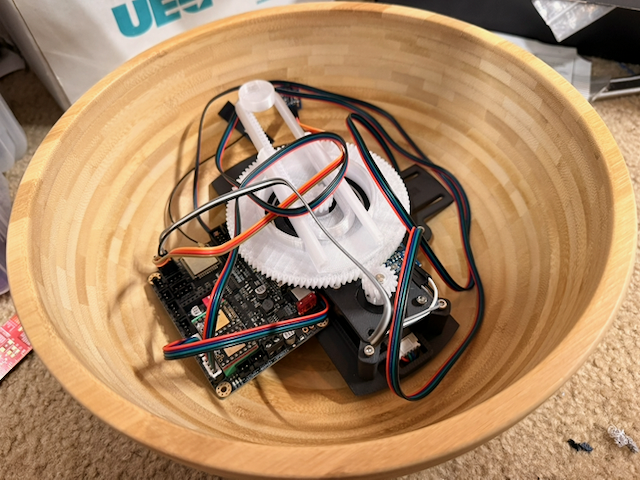
- Electronics Wiring – Connect motors to Arduino with appropriate driver boards
- Software Loading – Upload pattern generation code to the microcontroller
- Sand Filling – Add kinetic sand and perform initial pattern tests
Electronics & Control
The Dune Weaver uses an Arduino microcontroller to manage two stepper motors that control the magnet position. Pattern generation algorithms create mathematical patterns that guide the steel ball, resulting in the characteristic spiraling and concentric designs. The electronics include motor driver modules, power regulation, and optional connectivity for wireless pattern control.
Pattern Generation
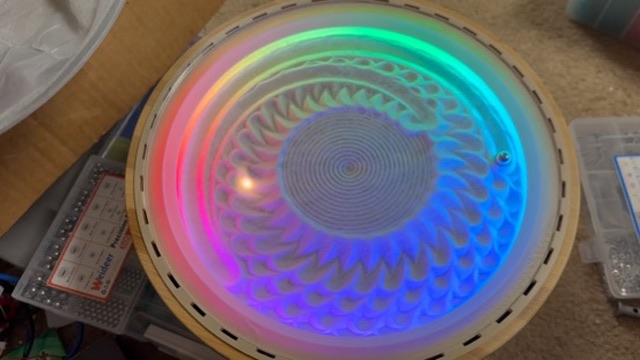
The magic of the Dune Weaver lies in its pattern algorithms. By moving the magnetic field in programmed sequences, the steel ball traces paths through the sand creating:
- Spiraling concentric circles
- Lissajous curve patterns
- Custom geometric designs
- Flowing, organic wave patterns
- Mathematical generative designs
Project Gallery


Technical Specifications
- Sand Table Diameter: ~12 inches (IKEA bowl)
- Ball Bearing Size: 20-25mm steel ball
- Motor Type: NEMA 17 Stepper Motors (2x)
- Microcontroller: Arduino Uno or compatible
- Magnet Type: Neodymium rare-earth magnets
- Power Supply: 12V for motors, 5V for Arduino
- 3D Printer Requirements: FDM capable of printing gears and mechanical parts
Safety Considerations
- Magnet Hazards: Neodymium magnets are extremely strong—keep away from metal objects and from younger visitors
- Pinch Points: Stepper motors and mechanical linkages create pinch hazards; exercise caution during operation
- Electrical Safety: Proper power supply isolation and wiring ensures safe operation
- 3D Printed Parts: Inspect all printed components for layer separation or defects before operation
Troubleshooting & Tips
- Sand Not Moving: Check magnet strength and ensure ball is magnetic steel, not stainless
- Jerky Motion: Verify motor calibration and ensure no mechanical binding in linkages
- Pattern Inconsistency: Review Arduino code timing and stepper motor step rates
- Sand Buildup: Periodically rake or level sand to maintain clarity of new patterns
- Magnet Misalignment: Use calipers to verify magnet positioning beneath the bowl
Resource Links & References
Official Documentation:
- Dune Weaver Project Wiki – Comprehensive documentation and design files
- Dune Weaver GitHub Repository – Source code and 3D design files
Recommended YouTube Tutorials:
- Dune Weaver Build Guide Overview – High-level project walkthrough
- Arduino Stepper Motor Control Basics – Fundamental motor programming concepts
- 3D Printing Mechanical Parts – Best practices for printing gears and precision components
- Kinetic Sand Art Installations – Inspiration and advanced pattern techniques
Makerspace Notes
The Dune Weaver Pro Mini is an excellent demonstration project for Reforge Charleston members interested in interdisciplinary fabrication. It combines skills in 3D printing, electronics, Arduino programming, and mechanical design. Members can collaborate on pattern design, optimize the mechanical transmission, or explore advanced control systems. The IKEA bowl variant makes this project more accessible and cost-effective than larger versions while maintaining visual impact and technical interest.
Visit Reforge Charleston to access the 3D printers, electronics workbench, and community expertise needed to bring this artistic project to life!